
"coffee statistics"
2000 article(s) found

Coffee exports from Honduras grew by 28% in the year to April
Professional baristas please follow the coffee workshop (official Wechat account cafe_style) Central News Agency Degucigaba 7 comprehensive report) according to the statistics of the operators, as of April this year, Honduras exported a total of 4.78 million 5894.12 bags (46 kilograms each) of coffee, an increase of 27.91 percent from 3.74 million 1656.05 bags in the same period in 2015-2016. According to the Honduran Coffee Association

Per capita coffee consumption in the United Arab Emirates has tripled
According to the latest statistics released by the International Coffee Organization, tea and coffee consumption in Arab countries has more than tripled in the past decade. Consumption in the United Arab Emirates has increased by 85% in the past three years. The per capita annual consumption of tea and coffee in the United Arab Emirates is 3.5 kg, which is about double that of other Gulf countries, and tea consumption has increased by 47%. 2011 Global Coffee

The export of Honduran coffee has reached 818 million US dollars this year.
Professional baristas please follow the coffee workshop (Wechat official account cafe_style) (Central News Agency Degucigaba 14 comprehensive report) according to industry statistics, the total value of Honduran coffee exports this year has reached 818 million US dollars, and it is estimated that the export volume will exceed 9 million metric piculs in the 2016-2017 harvest year, which ends on September 31. Honduran Coffee Association (Ihc

Market trend of boutique coffee South Korean coffee imports soar
According to statistics released by South Korea, from January to September 2014, South Korean coffee imports rose 18.7% year-on-year to 99372 tons, surpassing the largest imports since 1990 (92040 tons) in the same period in 2011. Over the same period, coffee imports surged 21.1% year-on-year to US $382 million. From the point of view of the importing country, the largest amount of coffee imported from Vietnam was 23686 tons.

Vietnam is the largest coffee supplier in China.
Wang Lei, deputy secretary general of the China-ASEAN Expo, said at the 9th China-ASEAN Expo held in Nanning, Guangxi on Saturday that Vietnam has become the largest overseas supplier of imported coffee from China, ChinaDaily reported. He said that China's imports mainly come from Southeast Asian countries, while Vietnam is the country that exports the most coffee to China.
Mocha pot
After hundreds of experiments in 1933, Alfonso, the founder of Bialetti Biloti, invented and manufactured the distilled pressure coffee pot (mocha pot for short), which has been in use until now, to make the first truly mellow "Espresso" espresso. According to the statistics of Nielsen in 1998, the brand recognition rate of "BIALETTI" was more than 90%. Ingenious design hides the pressure reducing valve
Factors influencing the Development of Coffee Industry
In the 1970s, three Americans turned Starbucks coffee into a coffee shop sign to promote the American spirit, and since then, a cup of Starbucks coffee has fascinated the world.

Consumption of tea and coffee in Arab countries has more than tripled
According to the latest statistics released by the International Coffee Organization, tea and coffee consumption in Arab countries has more than tripled in the past decade. Consumption in the United Arab Emirates has increased by 85% in the past three years. The per capita annual consumption of tea and coffee in the United Arab Emirates is 3.5 kg, which is about double that of other Gulf countries, and tea consumption has increased by 47%. 2011 Global Coffee

Taste mellow Mexican coffee flavor Taste Manor characteristics Fine coffee beans Introduction
Water transportation, especially sea transportation, has undertaken the task of transporting some goods, domestic goods and outbound passengers in Mexico. According to the statistics of the national port system, from January to December 2013, the national freight container load reached 288 million tons of cargo, an increase of 1.6% year-on-year. Among them, the deadweight of oil and oil derivatives alone reached 122 million tons, accounting for 42.5% of the total cargo volume.

Do Chinese people like drinking coffee? Brazil's coffee exports to China have increased sharply
Sao Paulo, 14 Jul (Reporter Gong Ruohan) Statistics released by the Brazilian Coffee exporters Association recently showed that from January to May 2019, Brazilian coffee exports to China increased by about 23% compared with the same period last year, mainly due to the interest of Chinese young people in coffee.
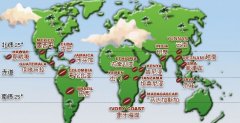
Introduction to the origin of coffee knowledge coffee
Coffee belt (coffee belt) coffee is mainly grown in tropical and subtropical regions, and coffee is mainly produced in more than 70 countries in the world. Most of them are distributed between 25 degrees of the Tropic of Cancer. According to the statistics of the Food and Agriculture Organization of the United Nations in 1976, coffee is grown in 76 countries and regions in the world, with an area of 118.845 million mu, of which Latin America is 64.86 million mu, accounting for the world's acreage.
Consumption of tea and coffee in Arab countries has more than tripled
The consumption of tea and coffee in Arab countries has increased more than threefold over the past decade, according to the latest statistics released by the International Coffee Organization. Consumption in the United Arab Emirates has increased by 85 per cent over the past three years. Annual per capita consumption of tea and coffee in the United Arab Emirates is 3.5 kg, coffee consumption is about twice that of other Gulf countries, and tea consumption has increased by 47%. Global Coffee 2011
Consumption of tea and coffee in Arab countries has more than tripled
According to the latest statistics released by the International Coffee Organization, tea and coffee consumption in Arab countries has more than tripled in the past decade. Consumption in the United Arab Emirates has increased by 85% in the past three years. The per capita annual consumption of tea and coffee in the United Arab Emirates is 3.5 kg, which is about double that of other Gulf countries, and tea consumption has increased by 47%. 2011 Global Coffee

Explore Fine Coffee
Professional barista exchanges, please pay attention to coffee workshop (Weixin Official Accounts cafe_style ) Taiwan has developed the habit of drinking coffee in the past ten years. According to statistics, by the end of 2014, the average annual cup of coffee consumed by Taiwanese people had doubled from more than 50 cups to more than 100 cups, indicating the menacing nature of black gold. Taiwan's Black Gold Prosperity Taiwan's Black Coffee Drinking Population Rising With TV and Media

Heilongjiang Coffee Industry and Communication Alliance has set up more than 400 Bingcheng Cafe.
Heilongjiang coffee industry and social alliance was established in Harbin. The reporter learned that according to incomplete statistics, there are more than 400 coffee shops in Harbin at present. In the future, our province will explore growing coffee beans in South America, and then sell these coffee beans back to China. Or will build bonded warehouses in Harbin to reduce the cost of coffee. It is reported that the purpose of Heilongjiang coffee industry alliance is to unite the coffee industry.

Nicaraguan coffee exports have exceeded 400 million US dollars this harvest year.
For professional baristas, please follow the coffee workshop (official Wechat account cafe_style). According to official statistics, in the first 10 months of this (2016-2017) harvest year, Nicaraguan coffee exports grew by 21.6% in total value and 17.8% in volume. According to the Nicaraguan Export Exchange Center (Cetrex), coffee was exported from Nicaragua from October 1 last year to July 31 this year.

Yunnan has geographical and climatic advantages for developing high-quality coffee industry
Speeding up the transformation of medium and low-yield coffee, benefiting the people and promoting the development of active exhibitors to enhance the international competitiveness of coffee products Yunnan has the geographical and climatic advantages of developing high-quality coffee industry According to Kunming Customs statistics, Yunnan coffee exports in 2011 earned 130 million yuan, an increase of 49.9% year-on-year, becoming one of the characteristic agricultural products in Yunnan Province with the fastest export growth. During the Twelfth Five-Year Plan period, coffee has been the focus of our province.

Koreans prefer coffee to kimchi or because it tastes like soup
Pedestrians with a cup of coffee are often seen on the streets of Seoul. According to statistics, each person in South Korea drinks an average of two cups of coffee a day, and Koreans drink coffee more often than they eat kimchi. According to a recent report released by South Korea's Ministry of Agriculture, Forestry, Animal products and Food Circulation, the single type of food that Koreans consume most frequently is coffee, which is consumed 12.3 times a week.

Yemeni coffee features Yemeni coffee flavor
Coffee has been a traditional export product of Yemen for hundreds of years, and it is still one of the most important cash crops and export products of Yemen. Statistics show that among the top 30 exports of Yemen in 2000, cooked coffee beans, raw coffee beans and coffee shells ranked second, eighth and 21st respectively, with a total value of about $17.5 million, of which raw coffee was about $12.25 million.